
On a quiet afternoon near the end of chemotherapy, a nurse named Melissa paused at Caroline Mason’s chair and asked a deceptively simple question: “So, Caroline…what’s next?” Caroline didn’t have an answer, at least not right away. The question lingered through the beeps and hushed corridor noise until it settled somewhere deep, amid months of fighting and fatigue. What had made her happiest before everything changed? Caring for other people. That truth rose to the surface. “I’ve always wanted to be a nurse,” she finally said—a whisper that would become a life she hadn’t yet dared to imagine. In March 2021, the single mother of two learned she had an aggressive cancer, a diagnosis that launched her into chemo, two surgeries, and a year of biologic infusions. The journey reordered everything: her time, her body, her faith, and the way she thinks about care—what it is, what it isn’t, and who it’s for.
“From task to patient.” That’s the phrase she returns to repeatedly. Too many people with life-altering diagnoses feel like checklists—vitals, meds, discharge—when what they need most is to be seen. Education is the throughline of her approach: equip people to understand their diagnosis, their choices, and their power. When knowledge lands, fear loosens. When care is personalized, dignity rises.
The Decision to Begin Again
Once Caroline said the words out loud—I want to be a nurse—she moved quickly. She enrolled at Southern Crescent Technical College (SCTC), navigating the logistics of returning to school 25 years away while still wrestling with lingering chemo brain and the very modern challenge of learning in an online world. Scholarships aimed at non-traditional students and hands-on help from SCTC staff made the leap financially and practically possible. The program was grueling—accelerated content, exacting standards, and clinical rotations that started early and ended late. When a first cardiac pharmacology exam rattled her confidence, a classmate, Jaden Speaks, became her study partner and a steadying force. They built a system—resources, practice, early-morning meetups—that carried them both forward.
The Moment Purpose Clicked
One clinical at Piedmont Henry Hospital sealed it. Caroline was assigned to a woman living with the same post-surgical pain Caroline had endured after cancer. Medications weren’t helping. But Caroline recognized the pain and shared a few specific, lived-in strategies that had brought her relief. It worked. “It’s the first time in over a year I’ve felt relief,” the woman said. In that instant, Caroline’s own suffering found purpose.
GOAL Winner. Advocate. Voice.
In January 2025, SCTC named Caroline its GOAL (Georgia Occupational Award of Leadership) Student of the Year, selecting her from a strong field to represent the college through the regional
and state rounds. The GOAL program, run by the Technical College System of Georgia (TCSG), elevates outstanding technical education students statewide; after each college winner is chosen, regional judging narrows the field to nine state finalists who compete in Atlanta for Student of the Year.
Caroline didn’t just stand at a podium; she stood for something personal, urging audiences to see what technical education can unlock—at any age, in any season, especially for people starting over.
From Patient to RN—And Right Back to the Bedside
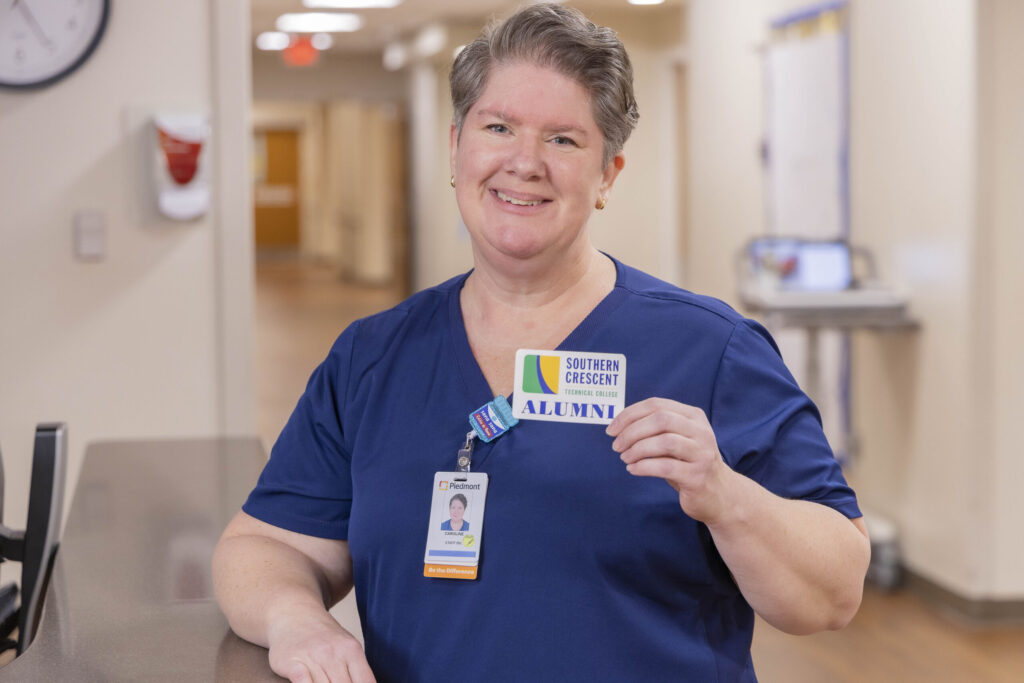
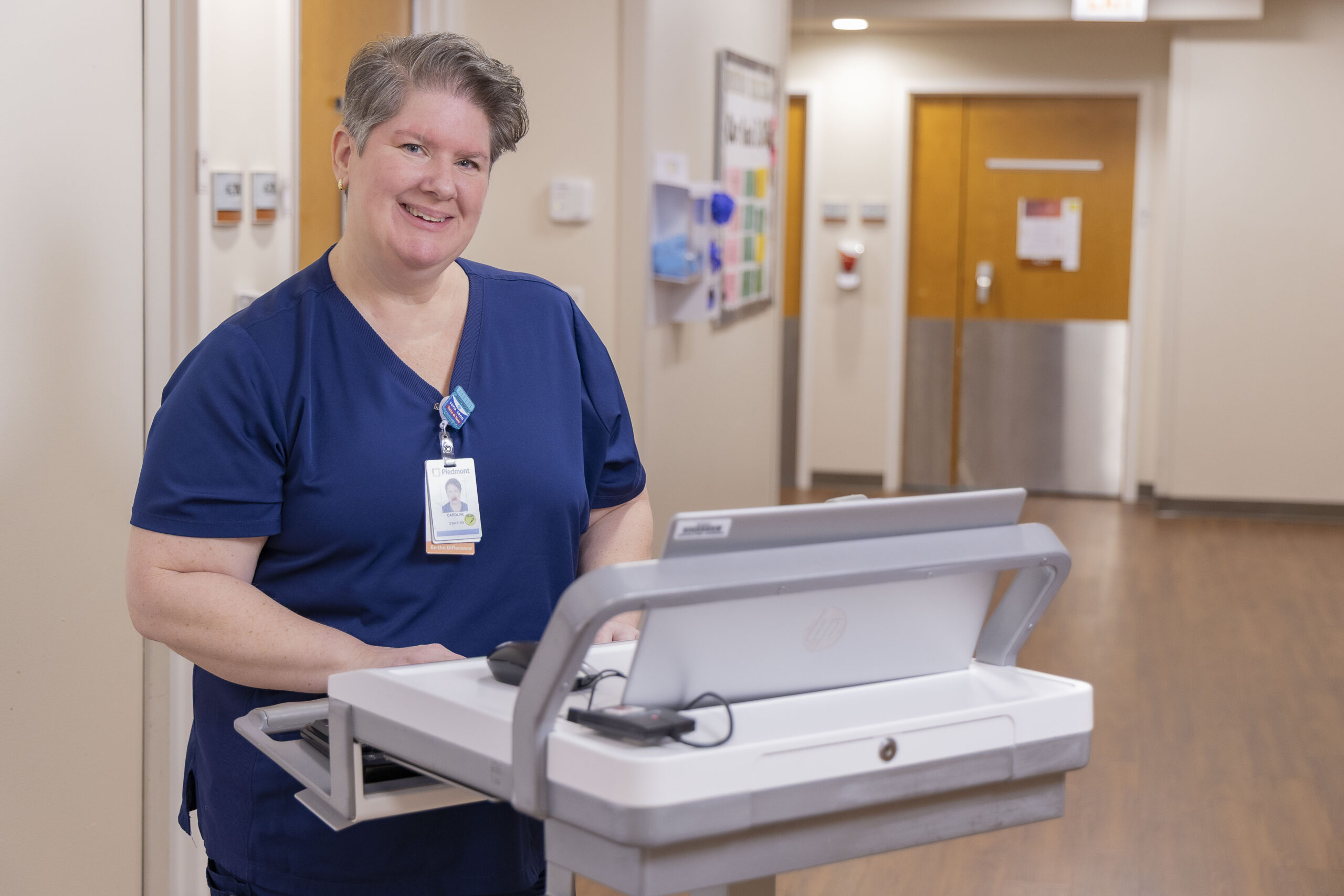
Today, Caroline serves as an RN at Piedmont Henry Hospital, where the work is real, fast, and never routine. She still pinches herself: four years ago, she was a patient; now she’s part of the team entrusted with lives. Mentors like Oshell Stone helped her bridge the gap from orientation to independent practice, and a culture of teamwork among nurses and PCTs steadied those first months when every decision felt heavy because it mattered. Her north star hasn’t shifted: education first, person first. She translates medical language into human language. She looks for the specific—what this person is worried about, what this family needs to hear, what this diagnosis means for this life. “Anytime I can connect on a personal level and offer the compassionate care I received,” she says, “my pain has a purpose.” Caroline was also invited to the shared governance board at Piedmont Henry, where bedside nurses help shape practice across the hospital. Though new to the profession, she soon realized that her fresh perspective and lived experience as both a recent graduate and a former patient allowed her to contribute meaningfully and advocate for stronger support for new nurses and for truly patient-centered care.
A Family’s Full-Circle Moment
This story isn’t just Caroline’s. When she enrolled at SCTC, her son soon followed, and her daughter began dual enrollment. Mother and son completed their associate degrees at the same time—and in a moment no one will forget, Caroline handed him his diploma on stage. She is most proud of them—of what they saw in her: a woman who faced down fear, asked for help, learned new tools, kept going, and turned the hardest chapter of her life into service for someone else’s hardest day.
What Sustains Her
Caroline is frank about the hard parts: as a new RN, tasks can take longer; the workload can be overwhelming; self-care can slide. Four months past orientation, she can measure the growth and feel momentum building. She credits her church community and faith for grounding her through cancer, through school, and now through the intensity of nursing. She is already aiming ahead—chemotherapy certification, medical missions, maybe a master’s one day, and a long-range dream to return to Southern Crescent Technical College as an instructor, shaping the next generation the way her mentors shaped her.
The Care She Practices—and Teaches
Ask Caroline what she hopes patients remember after a hospital stay, and she won’t mention a perfect IV start or an expertly timed med pass. She’ll say she hopes they felt seen, cared for, and empowered—because someone took the time to teach them, to listen, and to personalize a plan for their life, not just their chart. That’s the difference between “task” and “patient.” And that is Caroline Mason’s work.
By Brian Biggers