

With little food and even less medicine, there is not much hope.
We worked tirelessly to care for as many people as we could each day.”
Cuba is a paradox. She is that mysterious neighbor–a Boo Radley of sorts; a country so close to the US, and yet seemingly so far. We ask ourselves, what actually goes on over there?
From the glory days of the 1940s to today’s humanitarian crisis, Americans have watched Cuba with a sense of romanticized curiosity, empathy, and maybe even fear. It’s hard to ascertain exactly how bad things are, however, because Cuban authorities chronically manipulate or hide the data from the rest of the world. What we do know is that their suffering has been compounded by recent fuel shortages, which have led to power outages. With little food and even less medicine, there is not much hope.
American travel to Cuba for tourism is currently prohibited. However, there are categories of travel, including “Support for the Cuban People,” and this is how Medical Missions Outreach, based out of McDonough, Georgia, entered Cuba in February. Our team of thirty-seven healthcare professionals and volunteers flew from Atlanta to Havana with a unified goal: Provide compassionate care to the local people while sharing the gospel of Jesus Christ.
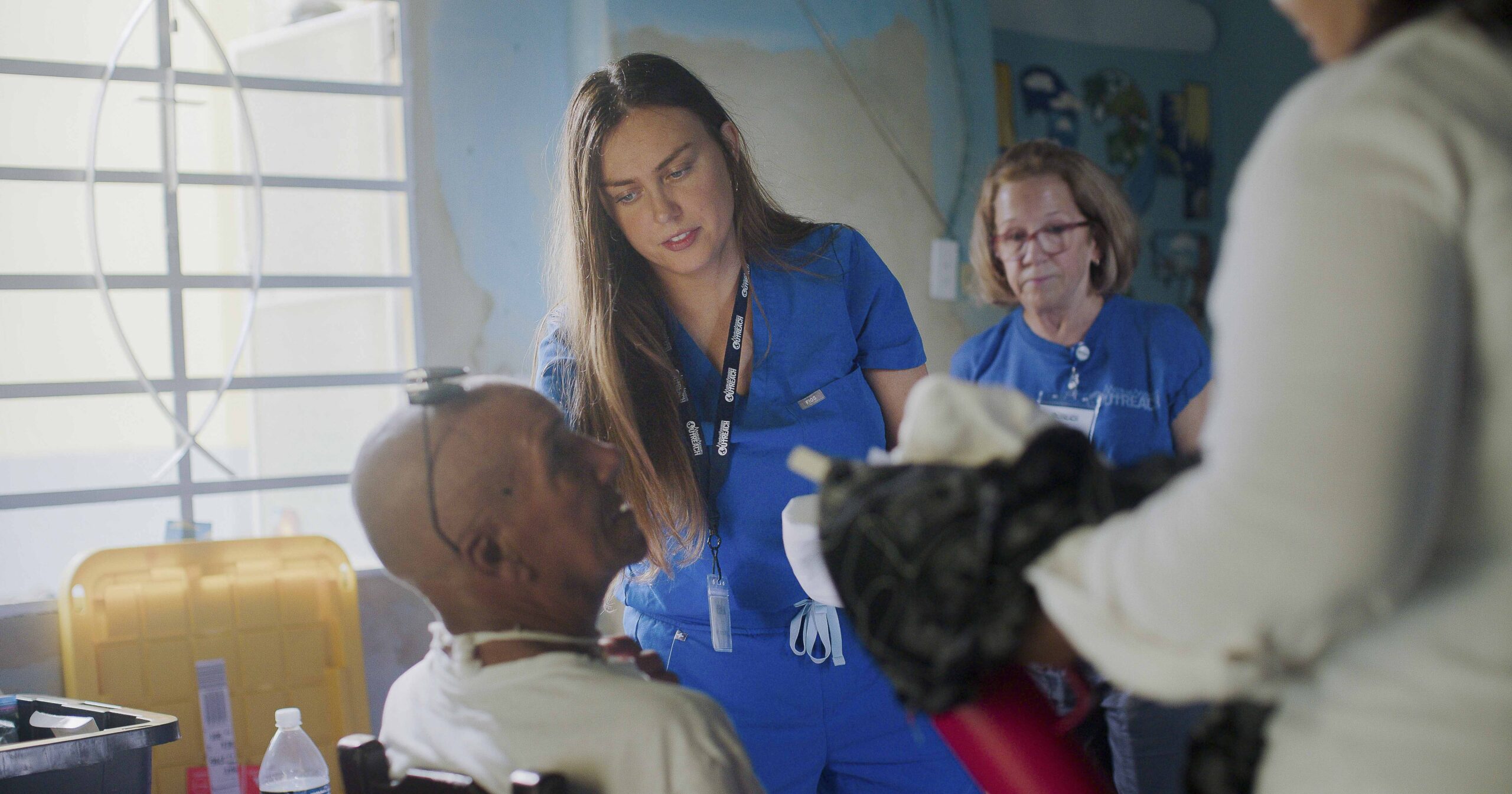
We worked tirelessly to care for as many people as we could each day–offering no-cost medical care, optical care, and physical therapy. Several local pastors and church members worked alongside our team. They interpreted, maintained order, prayed with the patients, and preached the hope of the gospel. The secret police stood across the street to observe, but they let us work. By the end of the week, over 1750 patients had passed through our clinics.
Each night we ventured out into the city on foot. We felt safe and welcomed as vibrant music filled the air. The dozen or more restaurants in Old Havana served bright plates of delicious food, but it became evident quickly that almost none of the patrons were actually Cubans. Their meager wages did not afford such luxury. In fact, one local doctor who came to help in our clinic said he earned around $20 USD per month. Every morning, as we drove to the clinic, we passed bread lines in the street; people crowded and clamored for their daily ration of government-issued food.
I sneaked off on our free day–headed down to Ernest Hemingway’s farm in the country. The farm, now old and decaying, cost a mere thirty cents to peek inside. I saw the Picasso on the wall, and the typewriter that banged out The Old Man and the Sea, and I was reminded again about the paradox of Hemingway himself–successful, but tormented.
My golden-haired daughter turned fifteen during our trip. We rented a 1950s-era hot-pink convertible to drive her to the clinic on her birthday. She grinned and giggled as we drove by the bay. It was hard to reconcile my daughter’s delight with the fifteen-year-old interpreter I met.
What do you want to be when you grow up? I asked.
I just want to be free, she whispered.
It’s been a few months since our team returned from Cuba. Conditions there have worsened. The future is uncertain, but the biggest lesson from Cuba is what we saw in the churches. The gospel continues to go forth in the midst of it all, and the people are thriving in spirit. Though discouraged, they are not defeated because Christ brings freedom, and that is the only true freedom.
If the Son therefore shall make you free, ye shall be free indeed. John 8:36
By Kelly Edmondson
Leave a Reply